Evolutionary Processes in the Wild
What processes generate the biodiversity we see in the world? We pursue a mechanistic and integrative understanding of evolutionary processes in the wild by drawing together information ranging from ecological community structure to quantitative genetic variation to sub-cellular molecular functions. Lab members have undertaken many different types of projects, including field demography, life history experiments, population and quantitative genetics, experimental ecology, behavior, and genomic analyses. In recent years, we expanded our repertoire to include functional genetics, epigenetics, theory development, and physiological experiments. And despite the microfuge tubes, pipettors, and gel rigs scattered across our lab benches, we remain anchored in aquatic ecology.
At first glance, the range of topics in the lab may seem like the dessert table at a Southern potluck dinner (lunch, for y’all from up North). We have projects addressing life history, mutation, vision & eyes, aging, epigenetics, maternal effects, development, and phenotypic plasticity. Our study organisms are mostly the crustacean Daphnia, but we have worked with plants and fish and protists and fungi too. All of our projects are aimed at understanding the causes of, and constraints on, the ecological diversification and random processes that makes the entangled bank so interesting to contemplate (bonus points to those who can place that paraphrase). Because we are interested in both genetic variation and environmental influences upon that variation, many of our projects involve phenotypic plasticity and genotype- environment interactions. So the unifying threads that tie our lab together are ecological diversification and phenotypic plasticity. If you're interested in helping us make sense of the the evolutionary chaos of variation, our lab may be a good home for you.
Our conceptual approach is to understand evolutionary processes in the context of complex traits, the features of organisms that set the boundaries of their distributions, mediate their interactions, and cause their ultimate success or failure. This approach allows both mechanistic and holistic understanding of the processes driving feedback between ecological interactions and evolutionary change. We draw on a variety of disciplines to address fundamental questions about nature and biodiversity: To what extent do adaptive and non-adaptive evolution drive the origin and maintenance of phenotypic variation? How do complex traits emerge from simple traits? How does phenotypic plasticity alter the trajectory of phenotypic evolution? Where does phenotypic plasticity come from? How do ecological interactions influence the evolution of gene function, and vice-versa? What is the genomic basis of organisms’ ability to respond to environmental change on ecological and evolutionary time scales?
Integrating diverse types of information necessitates using a wide variety of techniques, and ours include molecular work, field work, and laboratory phenotypic assays. We explore new techniques as required by the questions we address, and consequently we do a lot of troubleshooting.
Our Favorite Traits: Life History, Resource Acquisition, and Vision
For years, our focal traits were linked to aging, the progressive decline of performance that accompanies the unavoidable increase in adult age as time passes. These life history traits include age-specific mortality and reproductive rates, and related traits such as lifespan, growth, body size, juvenile performance, and resource acquisition. Our work on life history evolution has encompassed demographic traits and the physiological and molecular traits on which demography is built. One of our central goals is to understand the molecular and cellular mechanisms that underlie natural variation in rates of aging, lifespan, and reproductive senescence. Ultimately, our goal is to build a broader understanding of how genes and the environment interact to govern life history.
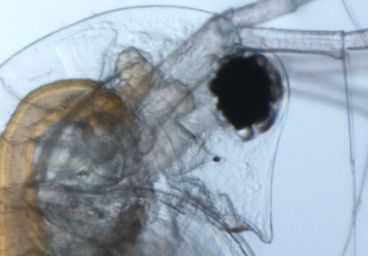
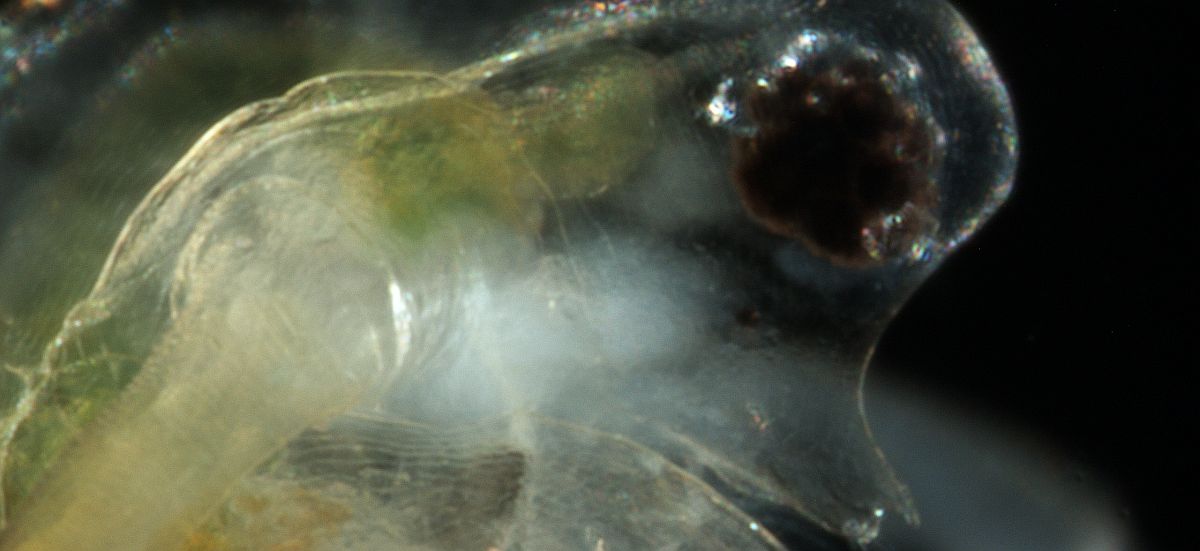
In recent years, our vision has shifted to focus on the evolution of eyes, mainly because it illuminates many more opportunities for puns. In aquatic environments, light is highly variable due to differential absorption of different wavelengths. And characteristics of absorption differ among waterbodies due to variation of physico-chemical properties among waterbodies. This creates many opportunities for ecological diversification. So far, our work has entailed examining variation of eye size and molecular evolution of opsins, the proteins responsible for light capture in animals. We are beginning to study visual function from physiological and ecological perspectives. Much of this work is in collaboration with Dan Speiser’s lab.